
Tooth decay is one of the most common health problems worldwide. Traditionally, decay was treated with fillings, crowns, or other invasive procedures. But in recent years, a new treatment called silver diamine fluoride (SDF) has changed the way dentists manage cavities without the need for numbing or drilling.

What Is Silver Diamine Fluoride?
The use of Silver Diamine Fluoride in oral health originated in Japan in the late 1960s. However, it wasn't until the past decade that this innovative treatment began gaining popularity in the United States.
Silver diamine fluoride is a liquid made of silver, fluoride, and ammonia. It is typically applied directly to a decayed part of a tooth. It’s a quick and painless alternative to traditional fillings.
Silver kills the bacteria that cause cavities. Fluoride helps rebuild and strengthen tooth enamel. Together, these ingredients stop the decay from spreading and help protect the tooth.
Benefits of SDF Treatment
No drilling and pain-free: Unlike traditional treatments like fillings, SDF is applied directly to the decayed area without the need for numbing or drilling.
Good for all ages: SDF is safe for both children and adults. For young children, it can be a life-saving treatment, helping to avoid traditional treatments and the need for general anesthesia, which can be particularly risky for kids. Additionally, as older adults often have a higher risk of cavities due to dry mouth, SDF provides an effective method for managing cavities.
Slows or stops cavities: SDF can stop small cavities from getting bigger, often avoiding the need for a filling.
Reduce tooth sensitivity: In addition to treating cavities, SDF helps with sensitivity in treated areas.
Things to Keep in Mind
While SDF has many benefits, there are a few important things to consider:
Staining: SDF turns the decayed part of the tooth black, but healthy parts stay white. Dental providers usually apply SDF to the back teeth, where the staining is less noticeable. If the staining is a cosmetic concern, it can be covered with a filling or crown later.
Not a permanent solution: SDF is effective at stopping the progression of decay, but it may not be a permanent cure. In some cases, further treatment, such as fillings or crowns, may be needed at a later time.
Multiple applications: For SDF to be fully effective, it typically requires multiple applications. In cases where the cavity is successfully stopped, an annual application of SDF may be recommended to maintain its effectiveness.
Not for all cavities: SDF works best on small or early-stage cavities. For larger cavities or broken teeth, other treatments may be necessary.
Metallic taste: SDF has a distinct metallic taste, which most patients may find unpleasant. However, this usually goes away quickly.
What to Expect During Treatment
The application procedure is quick and easy, involving the following steps:
Drying the tooth: The tooth is dried with air.
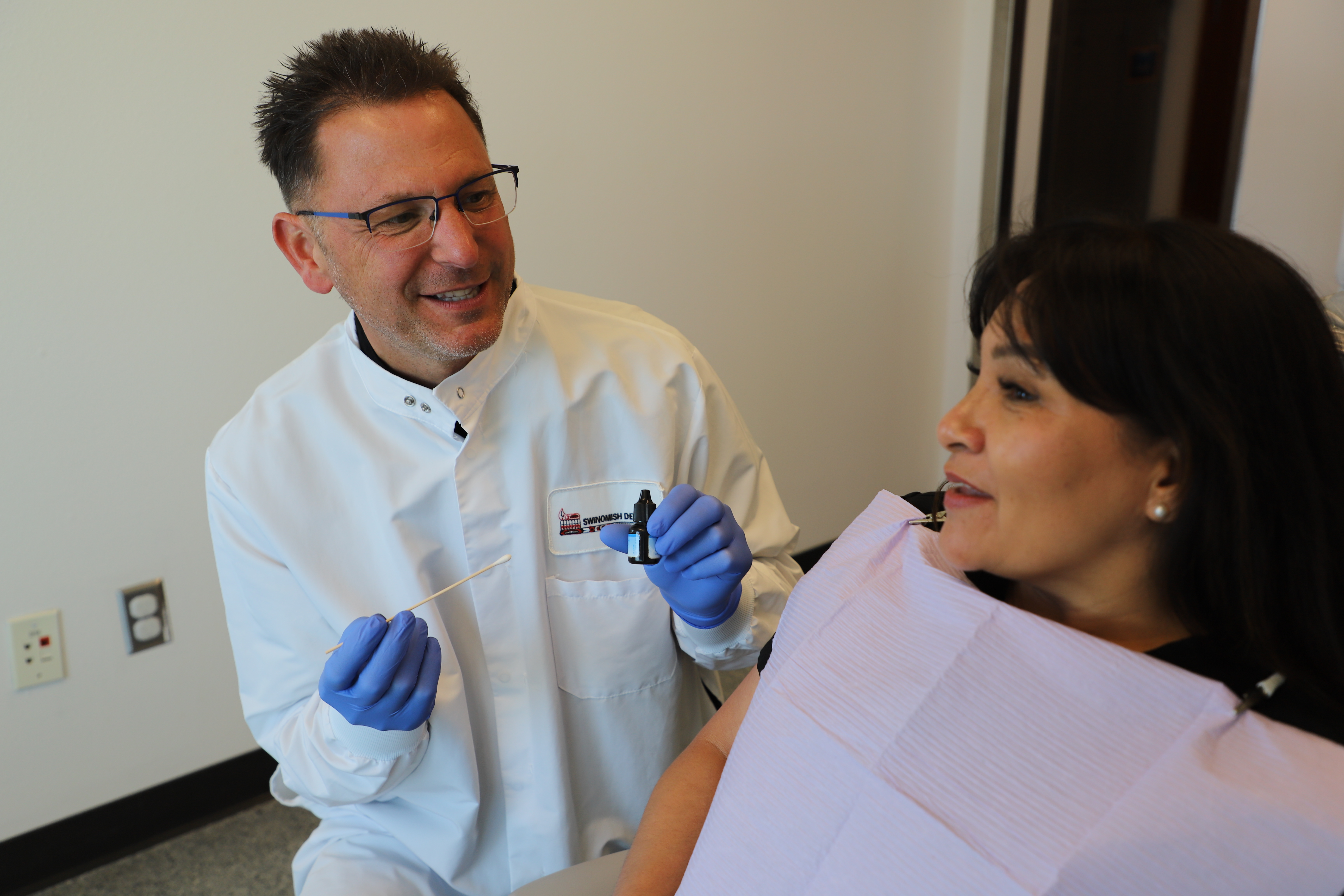
Applying SDF: The SDF is painted directly onto the cavity.
Sealing with fluoride: A fluoride varnish is applied over the area to protect it.
Silver diamine fluoride is a great treatment to stop cavities from getting worse without drilling or pain. This is part of the minimally invasive dentistry approach we practice at our clinic. It is an excellent option for many patients, particularly those who are young, elderly, or have difficulty undergoing traditional dental treatments.